Bedding · Materials & Layering
Choosing a Comforter for Year-Round Layering: Fill, Weight, and Breathability
A bed is a small climate system. The comforter is only one part of it: fibers, construction, sheets, blankets, and the room itself all help determine whether the night feels cool, close, or comfortably warm. Choosing with those relationships in mind can make a single comforter useful across more of the year.
Published October 29, 2026
On a warm evening, even a light cover can feel like too much. When cold weather arrives, the same bed may seem to lose heat before dawn. These shifts are familiar, but they do not necessarily call for a different comforter every season. A flexible bedding system can respond to changing temperatures by adding or removing layers, while the comforter supplies a dependable middle ground.
The search for year-round bedding often starts with a question about thickness. Yet loft—the visible puffiness of a comforter—is not a reliable measure of how warm it will feel in every bed. Fill type, the amount of fill, how it is distributed, the shell fabric, and the air moving around the sleeper all matter. A carefully chosen comforter works less like a single block of warmth and more like one element in a layered landscape.
Begin with the room and the sleeper
Before comparing comforter fill, notice the conditions that shape sleep. A bedroom that stays cool overnight presents a different challenge from a warm, sunlit room that holds heat. Indoor heating, air conditioning, humidity, mattress materials, pajamas, and the number of people sharing a bed can all change how warm the bedding feels. Personal temperature preference matters just as much: one sleeper may welcome a substantial cover while another wakes feeling overheated under the same layers.
A short observation period can be more useful than guessing. Take note of the bedroom temperature at bedtime and near morning, whether the room feels damp or dry, and whether discomfort comes from warmth, cold, or uneven temperature. If feet are cold while the upper body feels warm, the solution may be a more adaptable layer arrangement rather than a heavier comforter. If the whole bed feels clammy, adding insulation is unlikely to help.
Think of “year-round” as a range of workable conditions, not a promise that one comforter will suit every climate or every sleeper. A moderate comforter paired with breathable sheets may cover much of the year in a temperature-controlled home. A drafty room, pronounced seasonal swings, or very different preferences between bed partners may call for a lighter comforter plus a separate blanket that can be adjusted independently.
Fill: the material inside the comforter
Fill determines how a comforter traps air, responds to moisture, and settles across the body. Down, feather, wool, cotton, and synthetic fibers are common choices, but broad labels do not tell the whole story. The construction and quantity of fill are essential, and products made from the same material can still differ substantially in warmth and feel.
Down and feather
Down consists of the soft clusters beneath the outer feathers of waterfowl. Its fine structure can trap a notable amount of air without requiring a very heavy fill, which is why a down comforter may feel lofty yet light. Feather fill generally contains more quill structure and can feel heavier or more substantial. Many comforters use blends, so the stated composition is worth checking rather than assuming that “down” describes the entire filling.
Down comforters are often divided into stitched compartments or channels to help keep the fill from shifting. In a box construction, internal fabric walls create space for loft; sewn-through construction joins the top and bottom layers directly. Each arrangement affects how evenly warmth is distributed and whether the stitched lines feel cooler. Read the care label, too: some down-filled bedding requires more careful laundering and thorough drying than everyday sheets.
Wool
Wool fibers form a springy structure that can hold air and help manage moisture within the bedding. Wool comforters are often chosen for their steady, grounded feel rather than the cloudlike lightness associated with lofty down. They may suit sleepers who prefer a natural fiber and a comforter with some weight, though the exact warmth, drape, and maintenance needs depend on the construction. Confirm whether the item is machine washable or requires specialist care.
Cotton
Cotton fill tends to create a flatter, more evenly distributed layer than high-loft fills. It may appeal to sleepers who like a cover that feels substantial without a pronounced puff. Cotton’s performance depends on the quantity of fill and the quilted design, as well as the shell fabric. A lightweight cotton comforter can be useful in mild weather, while a thicker construction may provide more insulation. The fiber name alone cannot identify the warmth level.
Synthetic fill
Polyester and other synthetic fills are used in a wide range of comforters. They can be made in different weights and structures, and some are designed to imitate the loft of down. Many synthetic options are marketed as easy-care, but washing instructions vary: a large comforter may not fit safely in a home machine, and frequent washing can affect loft or stitching. Check the care guidance and practical dimensions before choosing.
No fill is automatically best for everyone. Consider the balance you want among warmth, weight, maintenance, and feel against the body. If allergies or sensitivities influence the decision, assess the complete product—including shell, fill, finishing, and washing requirements—and consult appropriate health guidance where needed. A fiber description should inform the choice, not stand in for an individual assessment.
Weight and warmth are related—but not identical
Comforter weight can refer to several different things. Some labels give the total weight of the finished item; others state the fill weight, the amount of filling inside. Neither figure can be compared meaningfully without considering size and construction. A king comforter naturally uses more material than a twin. A dense, low-loft comforter may feel heavier than a lofty one while offering a different kind of insulation.
Where available, warmth ratings or seasonal descriptions can provide a useful starting point, but terminology is not always consistent across makers. “All-season” may mean a moderate warmth level, a two-part system, or simply a broad intended use. Look for specific information about fill, fill weight, construction, dimensions, and care rather than relying on a single label.
Drape also affects perceived weight. A comforter that settles close to the body may feel enveloping, while one that stands away from the sleeper can feel airier. The shell fabric, quilting pattern, and the way the cover is sized all influence this impression. If possible, handle a sample or read detailed descriptions of construction. The experience of weight is tactile; a specification sheet can explain it, but cannot fully recreate it.
Breathability: follow the movement of air and moisture
During sleep, the body releases heat and moisture. Bedding that allows air and moisture to move through its layers can feel more comfortable than a tightly sealed combination that holds them close. Breathability is not a single property belonging to the comforter alone. Fill, shell, sheets, duvet cover, and the space between layers work together.
A breathable shell can help prevent the comforter from feeling stuffy, but the fill and construction matter too. Dense filling may trap more warmth, while a lighter fill can allow a quicker exchange of heat. Stitching patterns affect the distribution of fill and create seams or channels that may feel different across the surface. Because product construction varies, materials should be evaluated as a system rather than reduced to a simple ranking.
The layers closest to the skin are especially noticeable. Cotton percale, for example, is commonly described as crisp and cool to the touch. Linen has a more textured hand and is valued for its air circulation and moisture management. Neither material guarantees a particular night’s sleep; weave, finish, room conditions, and personal preference all contribute. But choosing comfortable sheets can make a moderate comforter more adaptable than a heavy cover paired with a less breathable base.
A cotton percale duvet cover can provide a crisp, breathable layer around an insert. The DownTown Company Chris Percale Duvet Cover, for example, is described as long-staple cotton percale with a cool, matte finish. This kind of cover does not determine the insert’s warmth, but it is part of the tactile and airflow experience of the finished bed. Check that the cover dimensions suit the comforter and that its closure and care instructions fit your routine.
Build a bedding system, not a winter-only bed
Layering gives a comforter room to serve through more of the calendar. Start with a sheet set suited to the sleeper and room. Add a moderate comforter as the principal insulating layer, then keep a lighter blanket nearby for nights that turn cool. In warmer conditions, fold the comforter down, remove the blanket, or sleep with only the sheet. Small adjustments can change the bed’s warmth without replacing its central layer.
The order of the layers matters less than how they function together. A sheet forms the clean, washable surface nearest the skin. A duvet cover encloses and protects the insert, while also adding its own texture and feel. A blanket can supply adjustable warmth without the bulk of a second comforter. A coverlet is often used as a lighter top layer or decorative finish, though its warmth depends on its material and construction. Keep the arrangement simple enough that changing it is easy.
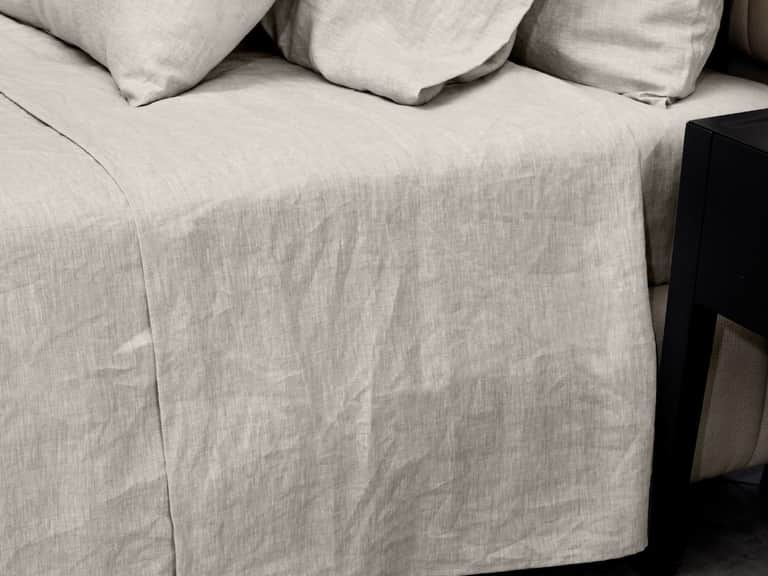
A linen flat sheet can be one option for a natural-fiber base layer. The Donatella Flat Sheet is described as 100% linen, made in Italy, and finished with a simple hem. Linen’s characteristic texture and way of softening with use may suit sleepers who enjoy a relaxed surface. As with any sheet, consider the stated care directions and how its hand feels against your skin before building the rest of the bed around it.
For people sharing a bed, separate top layers can sometimes resolve a difference in temperature preference. One sleeper can use a blanket while the other relies on the comforter, or each person can adjust their side with an additional light layer. This arrangement may look less symmetrical, but comfort is a practical design goal. A bed does not need identical insulation on both sides to feel considered.
Fit, construction, and the details that affect daily use
Measure the mattress and consider how much overhang you want before selecting a comforter. Mattress depth, toppers, and bed-frame height can change how a standard size falls. A comforter that is too narrow may leave sleepers exposed when it shifts; one that is very oversized can drag on the floor or bunch awkwardly. Compare finished dimensions rather than relying on a size name alone.
If the comforter will be used inside a duvet cover, match their dimensions as closely as possible. An insert that is too small may migrate inside the cover, creating empty corners; one that is too large can feel crowded and distort the drape. Interior ties or other attachment points help hold the insert in position. A cover with buttons, a flap, or another closure should be simple enough to manage during regular laundering.
Quilting and baffle construction help keep fill in place, but they also shape how warmth is spread across the bed. Look for evenly distributed compartments and secure stitching. If the comforter is reversible or used without a duvet cover, the shell’s surface and cleaning instructions become especially important. These details may be quiet on the product page, but they define the everyday experience: whether the bedding bunches, how it settles, and how easily it can be refreshed.
Care is part of comfort
A comforter can be well suited to a sleeper and still become inconvenient if it is difficult to clean or store. Read the care label before purchase. Some comforters can be washed at home only in a large-capacity machine; others call for professional cleaning. Drying is just as important as washing, particularly for fills that can retain moisture. Follow the manufacturer’s directions rather than assuming that a washable cover means the insert is washable too.
Using a duvet cover can reduce how often the insert itself needs cleaning, since the cover takes much of the everyday contact. That does not remove the need to care for the comforter according to its instructions, but it can make routine bed maintenance more manageable. Rotate or shake the comforter as appropriate to help it settle evenly, and allow bedding to air when practical. Store seasonal layers clean and completely dry, in a breathable container if possible.
Care also affects the feel of sheets and covers. Some fabrics soften with washing; others are designed to maintain a crisper hand. Use the recommended water temperature and drying method, and avoid overloading the washer. A well-maintained set of layers is more likely to remain comfortable and useful across repeated changes in weather.
A practical way to choose
When comparing comforters, work through a short sequence. First, decide whether you tend to sleep warm, cool, or somewhere between. Next, consider the room’s overnight temperature and whether it changes markedly by season. Then compare fill type, fill quantity or warmth guidance, construction, shell, care, and dimensions. Finally, picture the comforter in the full bedding arrangement—not in isolation.
- For warm sleepers: prioritize a lighter warmth level, breathable sheets, and layers that can be removed independently.
- For cool rooms: consider a more insulating comforter, while preserving flexibility with a separate blanket rather than relying only on excessive weight.
- For changing seasons: choose a moderate central layer and add or subtract a light blanket as conditions shift.
- For easy maintenance: check whether the comforter fits your washer, what drying it requires, and how a duvet cover can simplify routine care.
- For a shared bed: consider different top layers or separate blankets if sleepers have distinct warmth preferences.
The quiet advantage of adjustment
The most useful year-round comforter is not necessarily the one that promises to solve every temperature problem by itself. It is the one that fits the sleeper, room, and routine—and leaves space for adjustment. A breathable sheet, a moderate comforter, a protective duvet cover, and a removable blanket can form a simple system that changes with the night.
In that system, warmth is not a contest of thickness. It is the result of fibers holding and releasing air, layers meeting or separating from the body, and a room moving through its own daily cycle. Choose for the conditions you actually experience, check the practical details, and let layers do what they do best: make comfort responsive.